
How Can Fertility Centers Improve Their Online Presence Through Digital Marketing?
Discover how fertility centers can boost online visibility with SEO, quality content, local SEO, social media, and effective website optimisation strategies.
Introduction
Choosing a fertility center is an important decision for individuals and couples exploring reproductive healthcare. Before scheduling a consultation, many people research treatment options, specialist qualifications, clinic facilities, and available medical information online. This makes a clinic's digital presence an important part of how prospective patients discover and evaluate healthcare providers.
However, having a website or posting occasionally on social media is not enough to establish a strong online presence. Fertility centers need a well-planned digital marketing strategy that combines search engine optimisation, educational content, local SEO, website development, and responsible online communication.
Digital marketing for fertility centers helps clinics improve their online visibility, make reliable information accessible, and provide a better experience for people researching reproductive healthcare.
From improving search rankings to creating informative content, the right strategies can help fertility centers strengthen their digital presence and build trust with prospective patients.
1. Improve Search Engine Visibility With SEO
Search engines are an important starting point for people researching fertility-related information. They may search for fertility treatments, consultation procedures, reproductive health information, or clinics in their area.
Search engine optimisation (SEO) helps fertility centers improve their website structure and content so that relevant pages can appear in appropriate search results.
Target Relevant Keywords
A successful SEO strategy begins with understanding what people want to find when they search online.
For example, some users may want to understand the IVF process, while others may be researching what happens during a fertility consultation. These searches have different purposes and require different types of content.
Fertility centers should create dedicated service pages for the treatments they offer and publish educational blogs to answer common questions. This helps each page serve a clear purpose without competing with other pages on the same website.
Optimise Website Content
Every important website page should have a descriptive title, a clear heading structure, a relevant meta description, and useful information.
Keywords should be incorporated naturally into the content rather than repeated excessively. Search engine optimisation should prioritise helpful information and a positive reading experience.
Clinics should also review their existing website pages before creating new articles to identify content gaps and prevent keyword cannibalisation.
A well-planned SEO strategy helps search engines understand the website while making relevant information easier for prospective patients to discover.
2. Create Educational Content That Answers Patient Questions
Fertility treatment can involve complex medical information, and people often search online for explanations before consulting a healthcare professional.
Publishing educational content allows fertility centers to answer common questions, explain medical terminology, and help readers understand general treatment procedures.
Instead of publishing repetitive promotional articles, clinics should focus on the questions people genuinely want answered.
Useful Blog Topics for Fertility Centers
Fertility centers can publish educational articles covering topics such as:
- What Should You Know Before Your First Fertility Consultation?
- What Is the Difference Between IVF and IUI?
- What Happens During a Fertility Assessment?
- What Questions Should You Ask a Fertility Specialist?
- What Factors Can Influence Fertility Treatment Decisions?
- What Should You Know About Fertility Preservation?
Each article should focus on one primary topic and provide accurate, well-organised information.
For example, a blog about preparing for a fertility consultation could explain the purpose of the appointment, the medical history a specialist may discuss, and the questions patients might want to ask.
Medical content should be reviewed by qualified healthcare professionals and supported by credible sources. Articles should avoid unrealistic promises or claims that a particular treatment guarantees pregnancy.
High-quality educational content helps fertility centers improve search visibility while providing meaningful information to readers.
3. Strengthen Local SEO for Better Geographical Visibility
Many people consider location when researching fertility centers. They may want to understand where a clinic is situated, how to reach it, and which services are available.
Local SEO helps fertility centers improve their visibility in geographically relevant search results.
Optimise the Google Business Profile
An accurate and complete Google Business Profile helps prospective patients find essential clinic information.
Fertility centers should ensure that their business name, address, contact details, website, opening hours, and relevant categories are correct.
The information should remain consistent across the clinic's website and other relevant online directories.
Create Useful Location Pages
Fertility centers serving multiple locations can create dedicated location pages with accurate information about each facility.
These pages may include clinic addresses, available services, facilities, accessibility information, and appointment arrangements.
Avoid creating multiple pages with almost identical content simply by changing the location name. Each page should provide genuine value to visitors.
By maintaining accurate business information and useful location-specific content, fertility centers can improve their local online presence.
4. Develop a Website That Builds Confidence
A fertility center's website often provides the first detailed impression of its services. Visitors should be able to find essential information without navigating through confusing menus or irrelevant pages.
An effective healthcare website combines professional design, accessible information, and straightforward navigation.
Essential Website Features
A well-structured fertility clinic website should include:
- Clearly organised treatment and service pages
- Information about doctors and their qualifications
- Details about clinic facilities and relevant accreditations
- Educational articles and frequently asked questions
- Contact information and directions
- A simple appointment enquiry process
- Clear privacy information
- Mobile-friendly navigation
Website loading speed is also important. Slow pages, difficult-to-read text, and complicated forms can discourage visitors from exploring further.
Clinics should make it easy for users to understand their services and find appropriate contact options. Enquiry forms should request only the information necessary for their intended purpose.
Because fertility-related information is sensitive, websites must also use appropriate privacy and security safeguards.
5. Use Social Media to Share Relevant Information
Social media provides fertility centers with an opportunity to share educational resources, introduce healthcare professionals, and communicate general information about reproductive health.
Rather than relying entirely on promotional posts, clinics can develop a content strategy that focuses on education, awareness, and useful clinic information.
Social Media Content Ideas
Educational posts: Explain common fertility terms and general treatment procedures.
Doctor-led videos: Allow qualified specialists to discuss reproductive health topics and answer general questions.
Frequently asked questions: Address common questions about consultations, clinic facilities, and appointment preparation.
Clinic updates: Share relevant information about healthcare professionals, facilities, and operating hours.
Awareness posts: Provide evidence-based information about reproductive health and relevant awareness campaigns.
Content should be informative, medically accurate, and respectful of the emotional considerations surrounding fertility treatment.
Protect Patient Privacy
Clinics should obtain appropriate consent before publishing identifiable patient stories, photographs, or videos.
They should also avoid revealing confidential information when responding to public comments or reviews.
Social media should support access to general information rather than replace professional medical consultations.
A consistent social media presence can complement SEO and website content by helping people discover useful resources through different digital channels.
6. Use Google Ads to Reach Relevant Audiences
Paid search advertising can provide additional online visibility for fertility centers. However, successful campaigns require clear objectives, relevant landing pages, and compliance with healthcare advertising policies.
Create Relevant Advertising Campaigns
Where permitted, fertility centers can organise campaigns around the services they provide.
Each advertisement should direct visitors to a relevant page containing accurate information about the advertised service and the appropriate enquiry process.
For example, an advertisement about fertility consultations should lead to a page explaining what the consultation involves and how prospective patients can contact the clinic.
This creates a consistent experience between the advertisement and the website.
Measure Advertising Performance
Clinics can monitor metrics such as click-through rate, cost per click, relevant website visits, and enquiry volume to evaluate their campaigns.
A high number of clicks does not necessarily mean an advertisement is successful. Marketing teams should also assess whether the campaign attracts relevant visitors and supports appropriate enquiries.
Fertility centers must follow applicable advertising regulations and platform policies, avoid misleading medical claims, and protect sensitive health information when configuring advertising and tracking tools.
7. Maintain a Professional Online Reputation
People researching fertility centers may review clinic websites, publicly available feedback, doctor profiles, and business information before making contact.
Maintaining an accurate and professional online presence helps people understand the clinic and evaluate its services.
Keep Online Information Updated
Clinic websites and business listings should provide consistent information about contact details, operating hours, healthcare professionals, facilities, and available treatments.
Outdated information can confuse prospective patients and make it more difficult to contact the clinic.
Respond to Reviews Professionally
Fertility centers should respond to feedback respectfully and avoid discussing individual medical histories in public.
Clinics should also avoid pressuring patients to leave positive reviews or presenting unverified testimonials as evidence of treatment effectiveness.
Responsible reputation management focuses on transparent communication, accurate information, and patient confidentiality.
8. Optimise Website Content for AI-Powered Search
People increasingly use conversational search tools and AI-generated summaries to research healthcare topics. Fertility centers can prepare for these changes by publishing accurate, clearly structured, and informative website content.
Answer Questions Clearly
Articles should use descriptive headings and provide straightforward answers before exploring a topic in greater detail.
For example, an article about IVF can begin with a clear explanation of the treatment, followed by sections covering the general process and questions patients may wish to discuss with a specialist.
Demonstrate Medical Expertise
Healthcare content should be accurate, appropriately reviewed, and supported by credible sources.
Where relevant, clinics should identify the author or medical reviewer, provide professional qualifications, and update articles when medical guidance changes.
Publishing repetitive content solely to target different keyword variations is less useful than developing well-researched resources that address genuine information needs.
Although no strategy can guarantee visibility in AI-generated answers, clear and trustworthy content provides a strong foundation for online discoverability.
9. Track Digital Marketing Performance
Digital marketing strategies should be evaluated using measurable objectives rather than website traffic or social media followers alone.
Fertility centers need to understand which channels attract relevant visitors, which pages provide useful information, and where improvements are required.
Important metrics include organic search clicks, search impressions, website engagement, business profile interactions, advertising costs, and relevant enquiry volume.
Tools such as Google Search Console and appropriate website analytics platforms can help clinics understand their online performance.
Regular reporting allows marketing teams to identify trends, evaluate changes, and prioritise improvements.
Healthcare organisations must also ensure that analytics systems do not transmit identifiable patient details or sensitive reproductive health information to advertising platforms.
How Digital Allianz Can Help Fertility Centers Improve Their Online Presence
Building a strong digital presence requires a coordinated approach to website performance, search visibility, content development, and digital communication.
Digital Allianz offers digital marketing services, including SEO, website development, pay-per-click advertising, social media marketing, and content optimisation, to help businesses strengthen their online presence.
For fertility centers, these services can support better website organisation, improved search visibility, informative educational resources, and a more accessible online experience.
A suitable strategy should consider the clinic's existing website, relevant search opportunities, target locations, available services, and marketing objectives.
Digital marketing for healthcare also requires particular attention to medical accuracy, patient privacy, and responsible advertising practices.
By combining these considerations, Digital Allianz can help fertility centers develop a structured digital marketing strategy focused on relevant visibility, useful information, and long-term online growth.
Conclusion
Improving online visibility requires fertility centers to do more than maintain a website or publish occasional advertisements. It involves creating a connected digital strategy that helps prospective patients find accurate information and understand the services available.
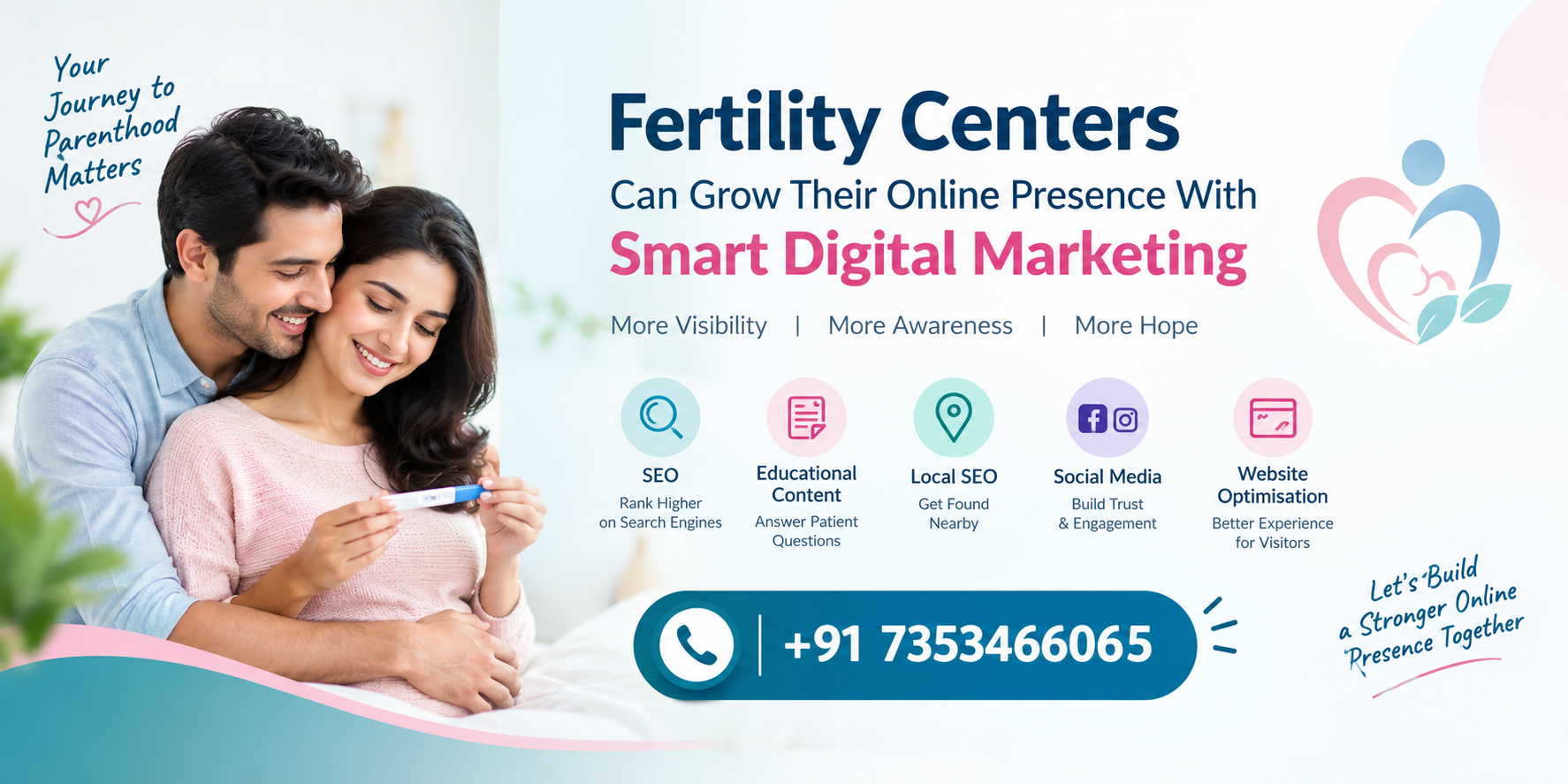
SEO improves search visibility, educational content answers common questions, local SEO supports geographical discovery, and website optimisation creates a more accessible user experience. Social media, paid advertising, and reputation management can further support these efforts when implemented responsibly.
By combining these strategies with medically reviewed content, privacy safeguards, and regular performance monitoring, fertility centers can build a stronger digital presence.
With the right digital marketing approach, fertility centers can make reliable information easier to discover and establish a more effective online presence with support from Digital Allianz.